 Within the model of the Transition Movement, as much attention is given to the psycho-spiritual and cultural aspects of social change as is given to more standard aspects of sustainable living like alternative transportation and renewable energy. Each transition initiative is encouraged to have a “Heart and Soul” working group that meets regularly to explore ways of aiding and supporting people psychologically and spiritually in times of transition.
Inspired by my recent visit to Emerson College, I offered to host and facilitate the April meeting of the Edinburgh Transition Initiative’s Heart and Soul Group. I have had much positive feedback about this session and I have included the full agenda for the meeting below. (This same agenda is also available on the Edinburgh Transition Heart and Soul blog).
Workshop: Finding the Words to Life Stories
Gathering at the Storytelling Hearth (10 minutes)
- A few moments of silence
- Quotation from Ursula K. Dancing at the Edge of the World: Thoughts on Words, Women, Places. New York: Grove Press, 1989:
Constructing a Web of Place Stories
an activity inspired by a workshop at The Scottish Storytelling Centre on Eco-schools and storytelling, led by Donald Smith and Claire McNichol (30 minutes)
- Think about a place that is (or was) important to you and a little story about it and why you feel strongly about it
- Once someone is ready to share their story, they grab the end of the string and tell their story
- The ball of string is then tossed to the next person who shares their place story. That person holds onto the string and passes it to the next, and so on.
- Do as many rounds as you like.
- When the stories have all been told we stop and admire the web that demonstrates how all these places are interconnected, not just on the level of ecosystems, but also because each of us brings these places with them wherever they go.
Story: The Village Saved
(a traditional Jewish folktale) (10 minutes)
Here are the bare bones of the story, so you can learn to tell it yourselves:
- Once upon a long time ago there was a village that came under threat
- The wise people of the village knew where to go, what to bring as an offering ,and what to say
- Disaster was averted
- The village lived in peace for many generations
- Then it came under threat again
- The wise people remembered where to go and what to say, but no longer knew what offerings to make
- It was enough, disaster was averted
- The village lived in peace
- The village came under threat
- The wise people remembered where to go, but no longer remembered what to say or what offerings to make
- It was enough, disaster was averted
- The village lived in peace
- The village came under threat
- The wise people no longer remembered what offerings to make, what to say or even where to go, but they remembered this story and that was enough
Telling Each Others’ Stories
this activity was inspired by a workshop at the Scottish Storytelling Centre led by Fiona MacLeod (1 hour)
- Split into pairs
- Spend some time thinking about an incident, episode, or event in which you did something or participated in something that you believe led to some positive change in relation to the environment, your community, social justice, or peace. Or, tell a story about an incident in which you did not do something to further your ideals and that you now regret.
- Now take five minutes each to tell your story to your partner
- Each of you listen carefully to the other, because you are going to re-tell that story to full group.
- I forgot this, but after telling our story we should each have said this classic folktale ending phrase: “This is my story, I’ve told it, and in your hands I leave it” (p. xxi in Warner, Marina From the Beast to the Blonde. London: Vintage Press, 1995).
- Back in the larger circle, each of us tells our partner’s story to the whole group. Don’t worry too much about the details, focus on communicating the essence of what you heard
- Discuss the experience of learning and telling a story orally, and on hearing your story told by someone else
Story: Truth and Story
by Marta Singh (10 minutes)
Closing Discussion
Resources and Links
- There are many excellent workshops and storytelling opportunities and performances on offer at the Scottish Storytelling Centre on the High Street of Edinburgh
- This entire session was inspired by a 5-day workshop I attended on Transition Tales at The School of Storytelling led by Ashley Ramsden at Emerson College
- Marta Singh reflects on the creation of Truth and Story on her blog
- Ursula K. LeGuin has written many books, all of them highly worth reading, but Transition People might be particularly interested in her early novel The Lathe of Heaven (1966), which is set in a post-climate change world. Her most famous books are probably the Earthsea Trilogy
- Websites for workshop leaders I referenced can be found at: Donald Smith, Claire McNichol and Fiona MacLeod (doesn’t have one yet).
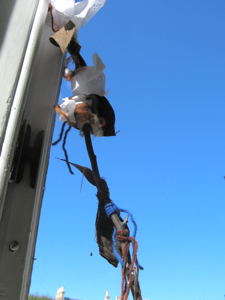

 The Scottish Seabird Centre in North Berwick has been experimenting with delivering environmentally-themed stories to schools over the internet. The stories, aimed at early years classes, focus on puffins and seals and other creatures that can be found in the Firth of Forth, especially on the islands that the Centre has webcams on.
 Restorying the Earth