From Penguins to Tigers: Storytelling at the Zoo in 2016

IMG_4502_2

2016 has gotten off to a very organised start for this RZSS Storytelling Resident.  I’ve finally edited and posted the story I crafted for the Penguin Festival (Animal Stories tab) and I’ve posted my upcoming performances (Events 2016 tab).

Being part of the Penguin Festival was a thrill, as a few penguin friends stopped by the window of the Penguin Hut to listen in on the stories.  I brought my good friend Allison Galbraith along to share in the telling and we had some wild fun chasing imaginary penguins and gingerbread men around the interpretation board.

Each time I’m asked to do an event, I learn something new about the world of animal stories.  This time, I struck out completely on my quest to find a traditional tale about penguins.  Up until more recent times, human contact with these antarctic birds has been minimal.  In the distant past, people would have encountered them in remote areas along the coasts of South Africa, South America, Southern Australia, Tasmania and New Zealand.  There are a few ancient artefacts depicting penguins and penguins make a few supporting-role appearances in Australian Aborigine Dreamtime Tales.  However, I couldn’t find anything substantial enough to tell for the Penguin Festival.

Contrast this historical lack of penguin tales to the masses of contemporary penguin stories.  I don’t think there’s a children’s library anywhere on the planet with fewer than three penguin picture books.  I myself, loved Mr Popper’s Penguins growing up.

There are also a number of true life penguin stories out there to draw on.  Which is what I did, crafting a story based on the real life use of guard dogs in penguin conservation in Australia.  I’m not the first to have done this, the Australians have made a movie about this same colony of penguins.  In fact, I’ve named the dog in my story in honour of the dog actor in that movie.

It’s an excellent story for conservation education as it provides openings to talk about the problems of introduced species (in this case foxes), connects with animals children may be more familiar with (the family pet dog) and contains role models of people passionate about protecting animals.  Of course it also provides opportunities to talk about the geography, biology and vulnerabilities of penguins.
Storytelling to Raise Awareness of the Plight of Endangered Species

rhinos

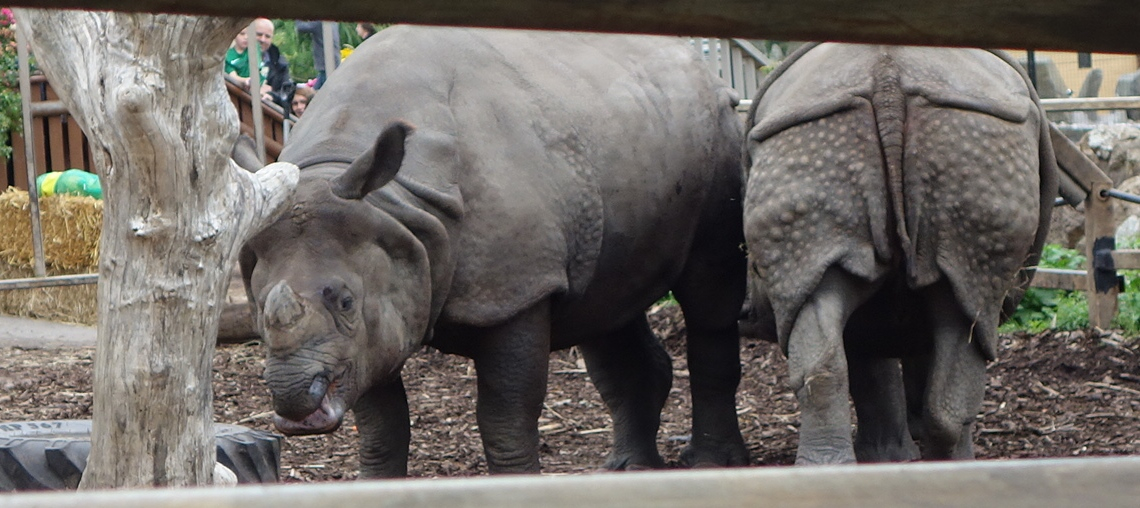
Last Saturday I told stories at the Edinburgh Zoo as part of their World Rhino Day festivities.  It was a surprisingly gorgeous day for September, so I told outside on the terrace around the corner from the zoo’s two  greater one-horned rhinos, Bertus and Samir.  It was a busy day for the rhinos who were also hosting a women’s rugby team and  the artist, Becksy.

Two weeks previous, I told stories for International Vulture Awareness Day.  Both events were well attended and great fun to participate in, but preparing for each felt quite different.  Local storyteller and youth worker Russell McLarty talks about “story deprivation” as something that afflicts some places to their detriment.  Well, it turns out animals can be story deprived to.

I’ve started my residency by setting out to find traditional stories and folktales for the zoo’s residents.  I struck storytelling gold with Carrion Dreams 2.0, which contains over 50 traditional tales about vultures and reference many others.  But it’s not just Benjamin Joel Wilkinson’s work.  Vultures are well-storied around the world, which surprised me.  I had a wealth of choice for those sessions.

Compared to vultures, rhinos are story deprived.  I was only able to find six stories in total about rhinos and that was after searching online and off.  One of those tales was merely written in the tradition of a traditional tale: Rudyard Kipling’s Just So Story, How Rhinoceros got his Skin.  Nonetheless, it is a brilliant story for telling and led my zoo sessions with it.  In four others, the rhino is but a minor character: A Caterpillar’s Voice, Plop! and the The River that Went to the Sky.  I did find this brief bit of story on an African tourism website: Why the Rhino is Bad Tempered.  However, it’s only in the story of The Prince and the Rhinoceros that the greater one horned rhino is front and centre in a traditional tale.

The greater one-horned rhino is indigenous to Northern India and Nepal, so I asked my colleague Naomi Appleton, an expert in the Buddhist Jataka folktales if she’d come across any rhino stories.  The answer was no.  The animals in Jataka stories tend to be monkeys and elephants, horses and other animals that would be found in or in proximity to human settlements.  And now that I think about it, vultures do fit this bill.  Up until their recent shocking decline (largely from the vet drug diclofenac), vultures were commonly found in and around human habitations in many different countries, while rhinos are mostly solitary.

I’m not sure what the meaning of story deprivation might be for animal species.  The multitude of folktales about lions, tigers and elephants has not stopped these species from being vulnerable to extinction through human actions.  But it’s something to think about as I prepare for future Animal Awareness Days.

Back from a Story-collecting Trek

DSC00512

…I only went as far as Lanark to visit my friend the storyteller Allison Galbraith and her bookcase of storytelling books.  I found an excellent story about Rainbow Lorikeets and a couple of good tales from South America.  As part of my residency I want to find tales for as many of the zoo dwellers as possible.  The only way I’m going to manage this is to call on my networks for help.  It will have to be a community effort.

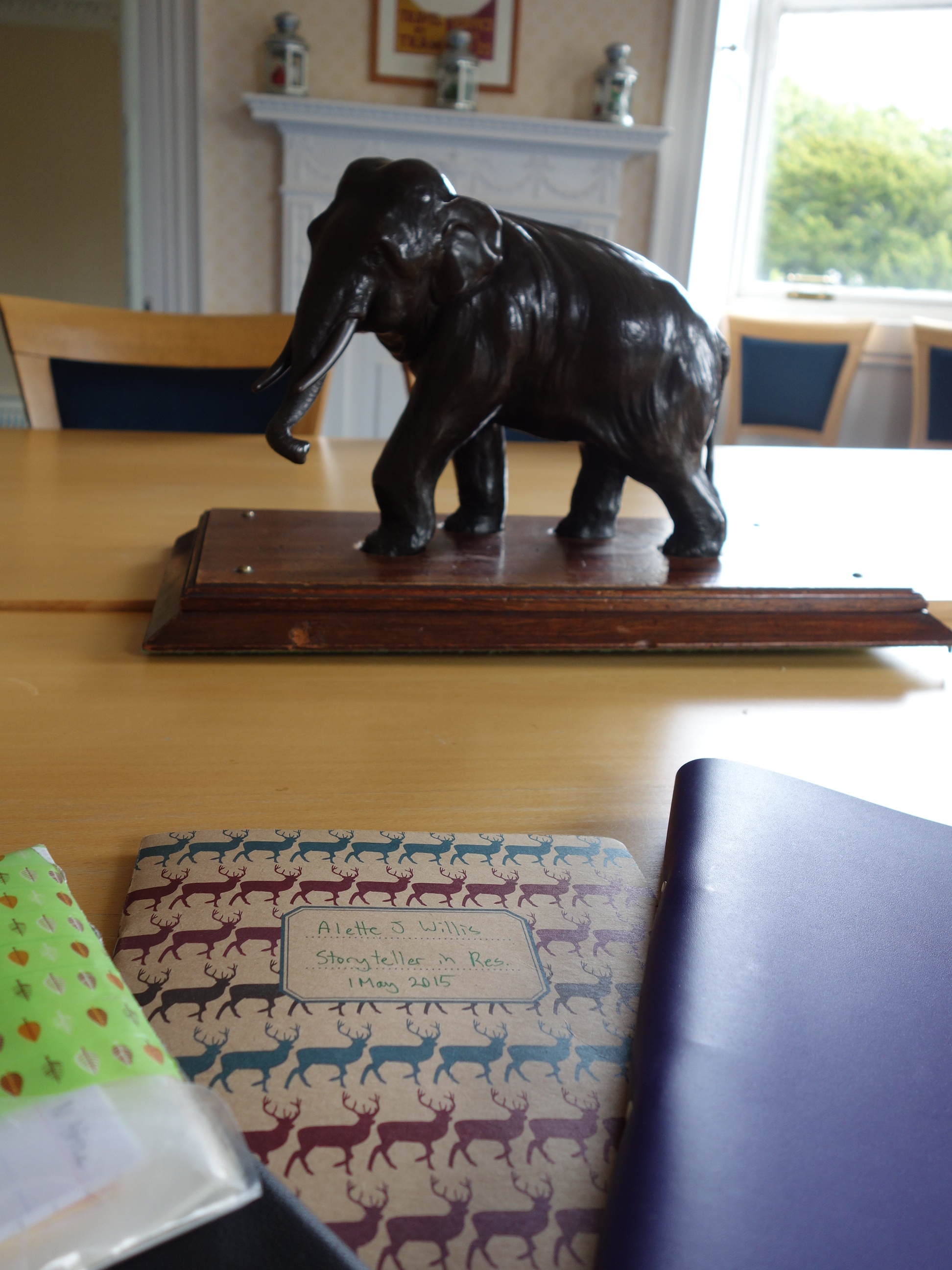
The first animals I’m going to tell stories for are the zoo’s Egyptian Vultures and Turkey Vultures for World Vulture Awareness Day on September 5th.  I had a meeting with one of the bird keeper and one of the hoof stock keepers to talk about the messaging for both that day and Rhinoceros Awareness Day later in September (22nd).  We had our meeting in the Keith Room of the Old Mansion House in the company of the little elephant sculpture.  I wonder what stories that room, and the elephant, could tell?
I’ve done well on vultures, finding an ebook on vulture human relationships over the centuries, which contains dozens of folktales from around the world, though about two thirds of the tales are from the Western Hemisphere.  I’ve been reading it avidly since I downloaded it.  Highly recommended for when you need a vulture tale: Carrion Dreams 2.0: A Chronicle of the Human-Vulture Relationship.  I’m still working on Rhino Tales.  Rudyard Kipling had a good one, I seem to recall.
See my events page for other opportunities to hear me tell: Events