 There are many reasons why violence against women and children is an environmental issue. The one I have in mind tonight, however, has to do with access to “wild” spaces.
I’m not going to get into the whole debate over what is “wild” and whether “wilderness” actually exists anymore. What I want to focus on is access to places that are not completely dominated by human beings, their artifacts and their activities. There are many arguments why access to these sorts of places is healthy for both people and for the environment. The problem is, access is unequal across society, and I’m not talking about physical distance or even car ownership.
Over the past two weeks, in my job as a research fellow, I’ve been analysing transcripts of interviews with women adult survivors of childhood sexual abuse. The focus of the research is on the impact of that abuse and of subsequent counselling on their experience of parenting.
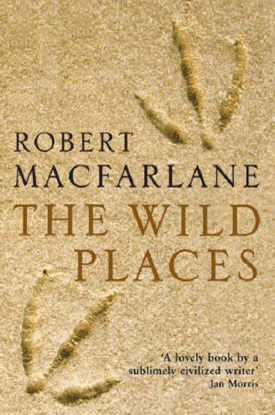
During the day I’ve been immersed in these women’s stories. Meanwhile, at night I’ve been reading, and enjoying immensely, Robert MacFarlane’s The Wild Places for my Green Book Group. The Wild Places is a series of essays recounting MacFarlane’s adventures in some of the last wild places in the British Isles. In terms of their geographies, the two sets of stories could not be more heart-breakingly different.
By hiking in to remote places and staying there, usually on his own, MacFarlane has some amazing experiences, encountering storms and wild animals, geological oddities and secret worlds. Reading his stories was inspiring. I wanted to take the journeys he took, have the encounters with the more-than-human that he had. But as a woman I wouldn’t want to go alone, and that’s without ever having experienced what the women I was reading about had gone through.
Through the transcripts of the interviews, I read about women who were uncomfortable being left alone in a strange place even for a few minutes. I read about the overwhelming anxiety they felt when their children were out of sight, when they were down the road at the playground, when they came home from friends’ houses later than they had promised. In one story, a new mother’s geography contracted to the size of her child’s room as she watched over her baby, afraid something terrible was going to happen. When her daughters were older, she could not bring herself to allow them out on their own, not even into the back garden.
Despite and even because of their experiences, these women made efforts to give their children better childhoods. One mother wanted to make sure her sons had access to the natural world, giving them opportunities to play in mud and walk barefoot on beaches, even as she struggled inside with feelings of anxiety. Another spoke of the simple joy she felt, now that she’d gone through counselling, playing with her daughter in the woods, making up for her own lost childhood.
I’ve only come across this issue of violence against women as a barrier to accessing “wild” places in a couple of nature writers’ work. In Bird Songs of the Mesozoic, David Brendan Hopes writes about feeling uncomfortable encountering a female jogger alone in an urban woods where a woman had recently been assaulted. Lisa Couturier, who is a hero of mine, includes an essay entitled “For All the Girls Who Couldn’t Walk into the Woods” in her collection The Hopes of Snakes. The subject, of course, how violence against women restricts women’s access to these wild places, not because we fear heights or currents, sharks or bears, but because we’ve learned to fear the male of our own species.
As if to drive this point home, my husband and I started watching the Danish TV series “The Killing” this weekend. It begins with a teenage girl being hunted through the woods in the dark.
Robert MacFarlane, The Wild Places, Penguin Books: 2007 (0143113933).
David Brendan Hopes, Bird Songs of the Mesozoic: A Day Hiker’s Guide to the Nearby Wild, Milkweed Editions: 2005 (1571312773).
Lisa Couturier, The Hopes of Snakes & Other Tales from the Urban Landscape, Beacon Press: 2005 (0807085650)

 Restorying the Earth